2026 Nissan Aria Advance+


Price
$63,000 (excl. on road costs)
3 Things We Love
* Adjustable Centre Console Storage * A Confidence-Boosting 10-Year Warranty * Two Gloveboxes for Everyday Practicality
3 Things We Hate
* Limited Storage Despite Having Two Gloveboxes * Fiddly Haptic Buttons Hidden Behind Fake Wood Trim * An Odd Steering Wheel Centre Marker That Feels Unnecessary
Overall Rating
6
MotorMarvel Rating
3
Intro
The Nissan Ariya has taken nearly five years to reach Australia, arriving in 2026 into an EV market that has moved on quickly. Priced at $63,840, the Ariya Advance + sits uncomfortably between budget and flagship offerings, competing with mid-to-upper variants of the Tesla Model Y, BYD Sealion 7, and Kia EV5, as well as a growing list of more competitively priced alternatives. With performance figures that lag behind newer rivals, the Ariya isn’t aimed at spec-chasers — raising the question of whether its late arrival leaves it struggling to stand out, and who it truly appeals to in an increasingly crowded segment.

Exterior
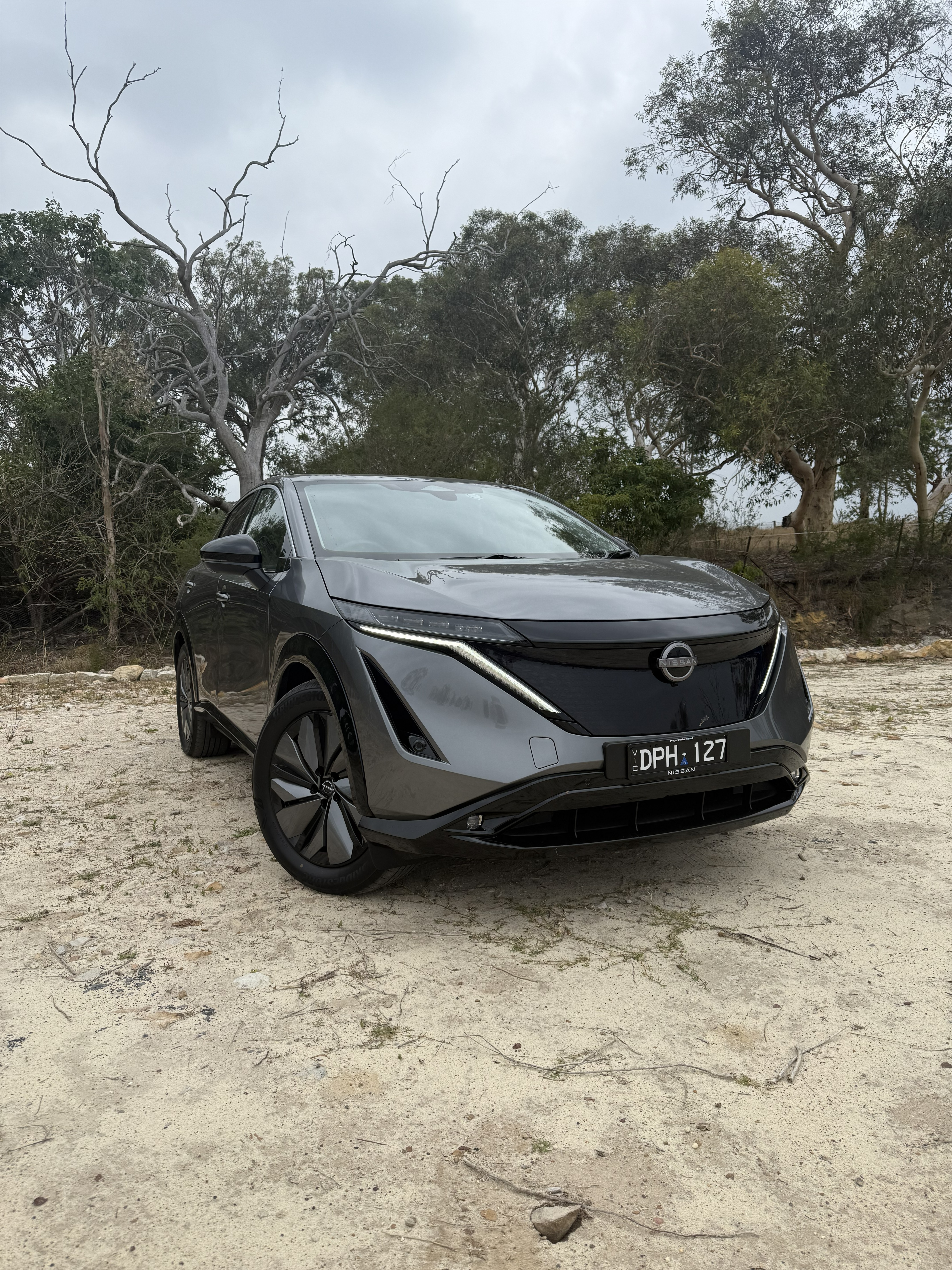
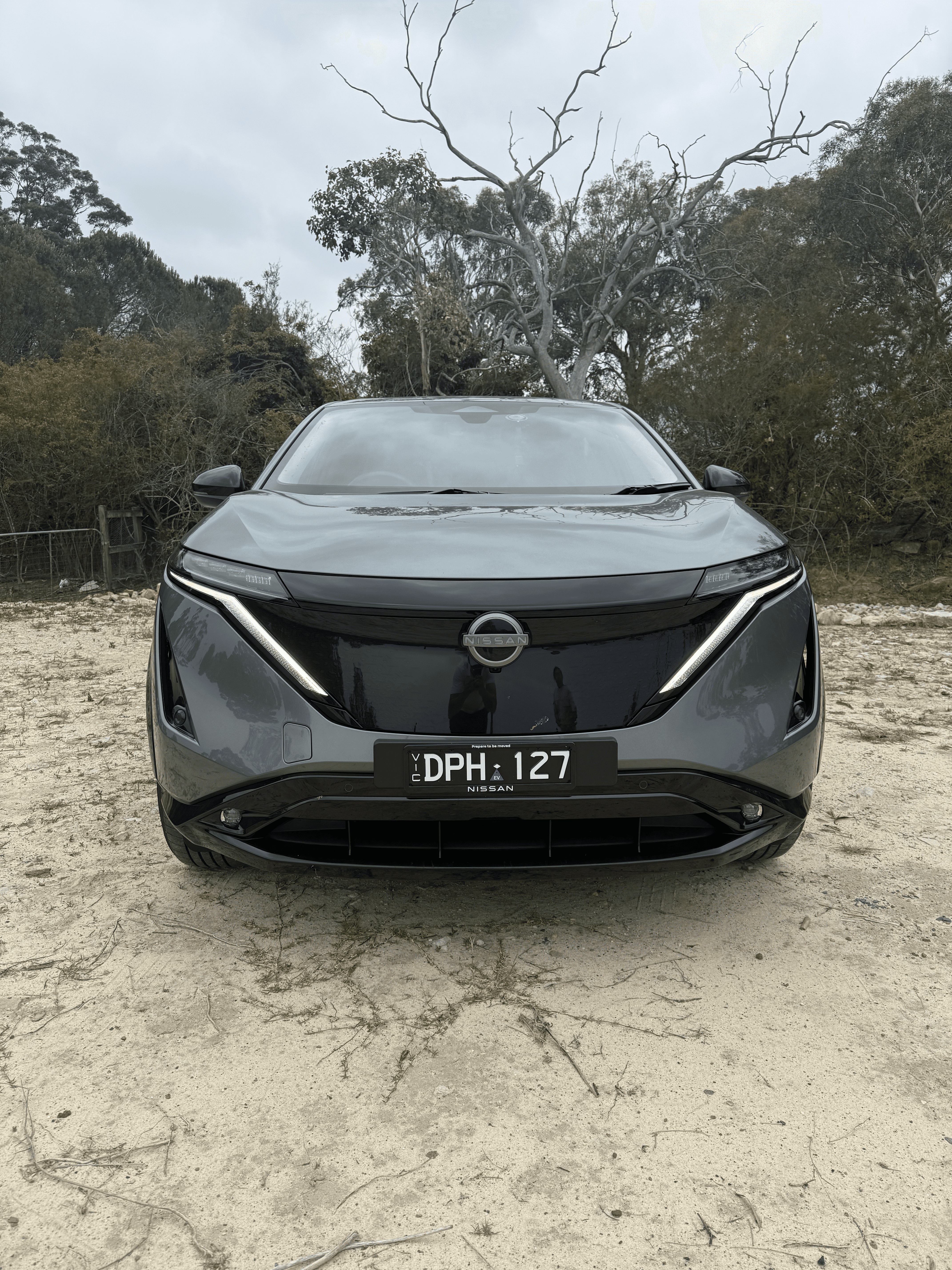
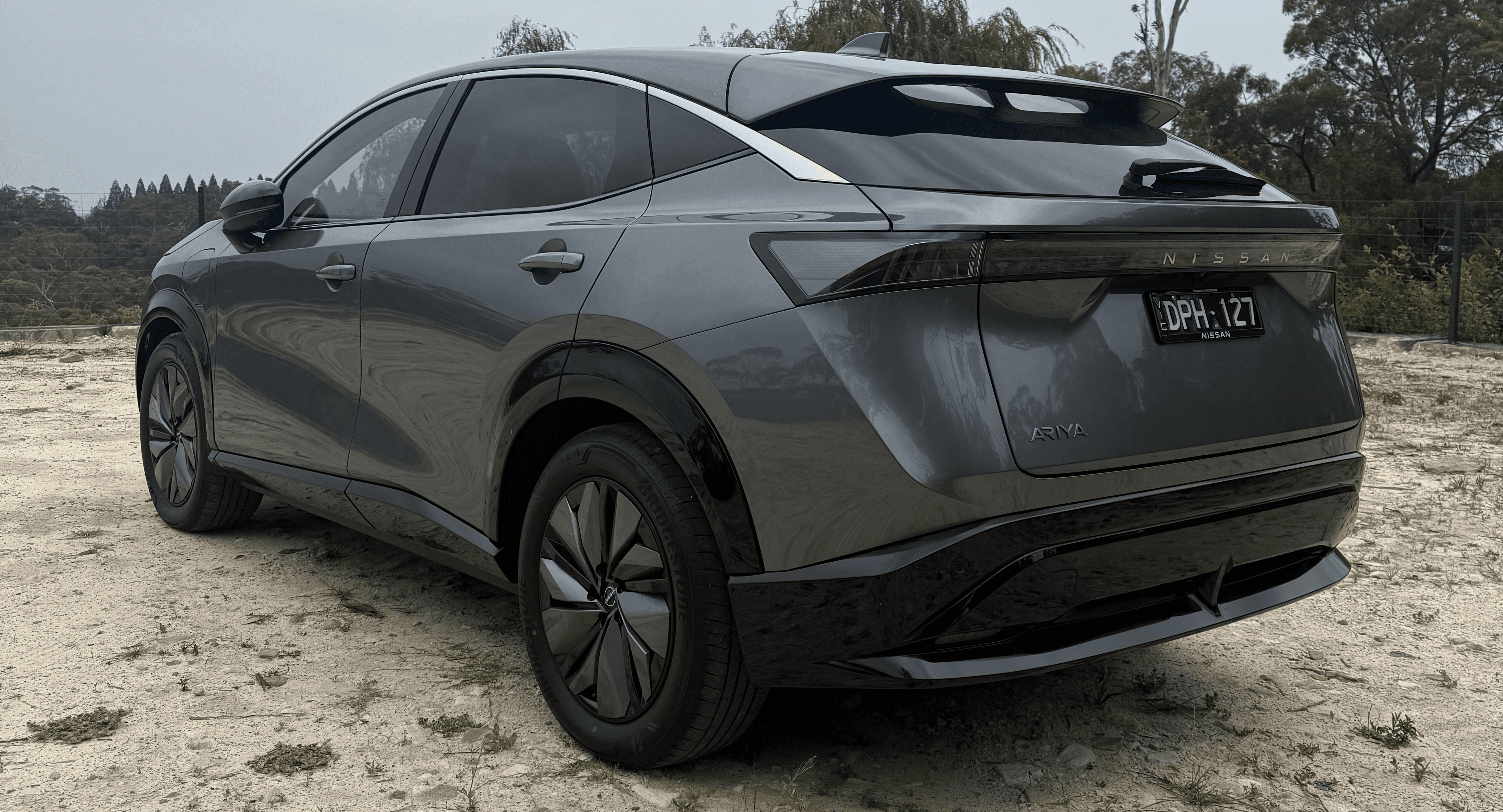
The Ariya’s overall shape is instantly familiar. Like most electric mid-sized SUVs, it follows the now well-established EV silhouette, which isn’t necessarily a negative — but it does mean the Ariya struggles to visually separate itself from the pack. Up front, Nissan has at least attempted to inject some individuality. The sharp, angular LED headlights give the nose a slightly more aggressive look, and the illuminated Nissan badge adds a modern touch. That said, the design doesn’t strongly reference Nissan’s existing design language, which feels like a missed opportunity to reinforce brand identity. Along the sides, the Ariya continues the familiar theme. Piano black wheel arch trims and side detailing add contrast but are prone to scratches and fingerprints, which may frustrate owners over time. The 19-inch alloy wheels feature the now-common aerodynamic hubcap design, further reinforcing how closely this car follows established EV norms. At the rear, a full-width light bar spans the tailgate with “Nissan” integrated into the centre — reminiscent of Porsche’s approach on the 911. Gloss black lower trim finishes things off neatly, but again, nothing here truly stands out. The Ariya isn’t unattractive; it simply blends into an increasingly crowded segment.


Salvatore Gerace
MotorMarvel Journalist
Interior
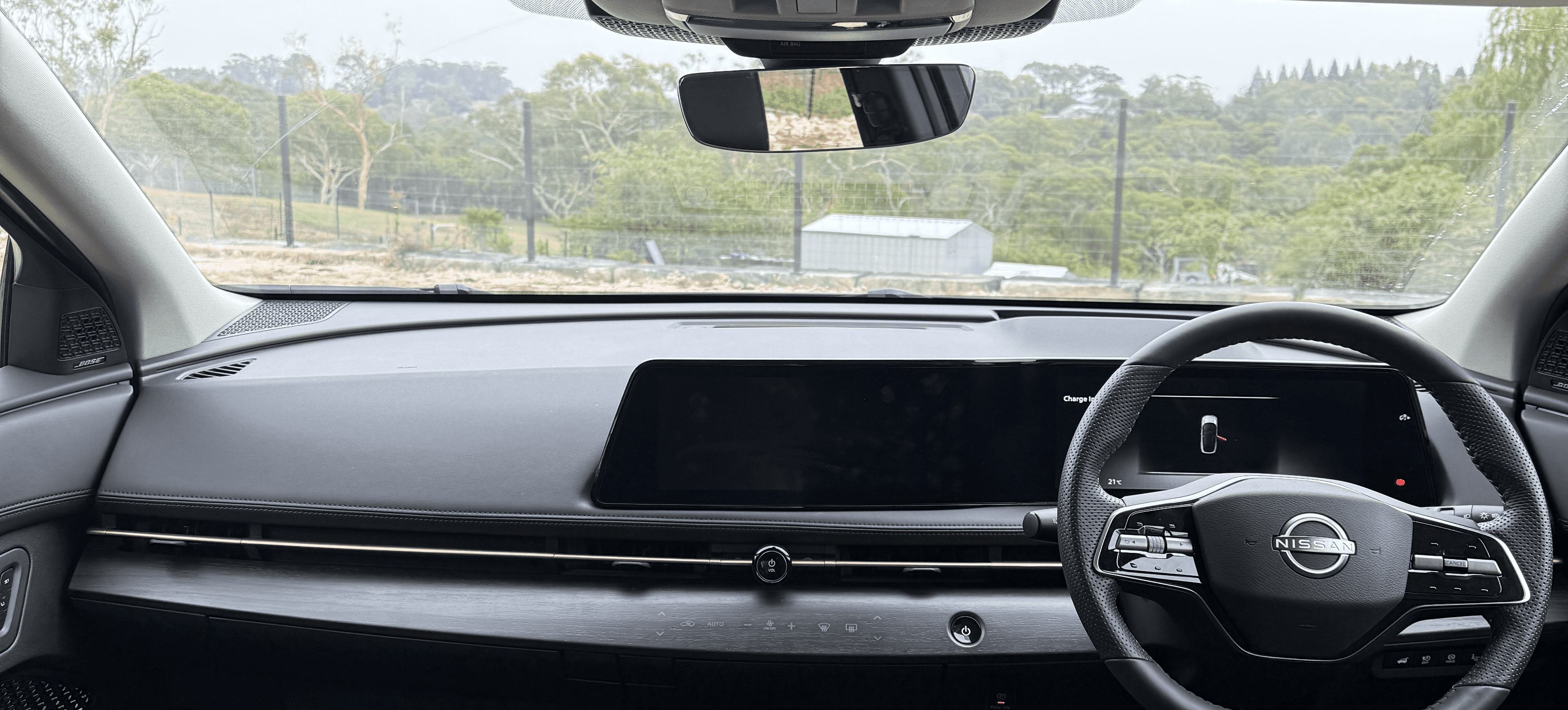
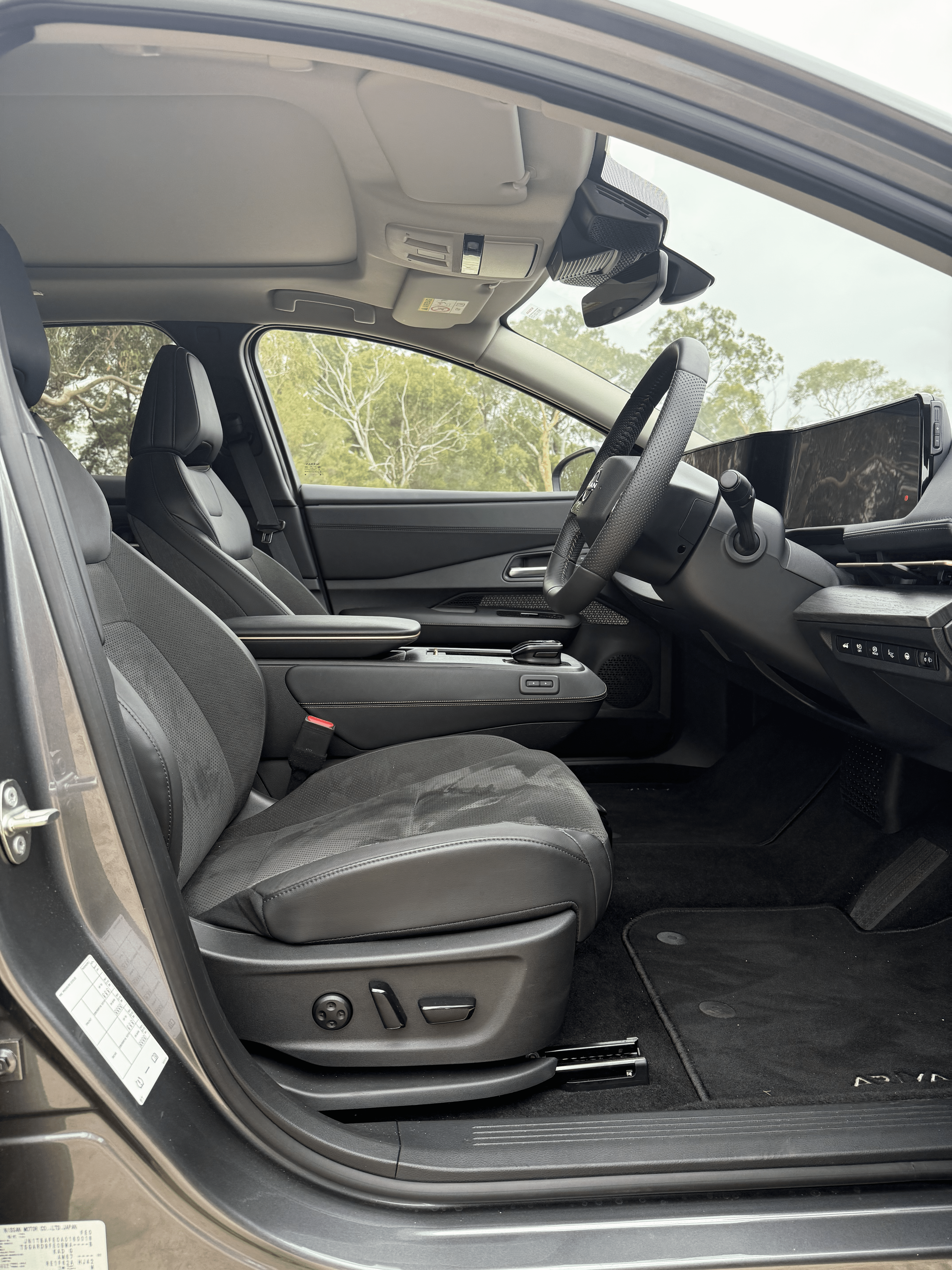
Step inside, and the Ariya immediately feels premium — but also anonymous. If you were to cover the badges, it would be difficult to identify this as a Nissan, as there’s little in the way of brand-specific design language. That’s disappointing, because the layout itself is genuinely impressive. The cabin is finished with a mix of faux wood trim, copper accents across the dashboard, and copper stitching on the faux leather door panels and centre console. It’s a distinctive combination that looks modern and upmarket. The Alcantara-trimmed seats are particularly comfortable, and the leather-wrapped steering wheel feels good in hand — although the centre marker positioned at the bottom rather than the top is an odd and unnecessary quirk. One of the more controversial design choices is the use of haptic-touch buttons embedded within the wood trim. While visually clean, they’re inconsistent in operation — sometimes responding to the lightest touch, other times failing to register inputs at all. Physical buttons and dials would have been far more intuitive, though it is pleasing to see a proper volume knob retained. Ambient lighting behind the perforated speaker grilles adds a premium feel at night, and overall the cabin is a pleasant place to spend time. Technology is handled by dual 12.3-inch displays: one for infotainment and one for the digital instrument cluster. The driver display is crisp, clear, and highly customisable, while the infotainment screen feels dated by comparison and is let down by a dull matte finish. Thankfully, Apple CarPlay, Android Auto, a head-up display, and an excellent Bose sound system help offset those shortcomings. Practicality, however, is where the interior begins to falter. The electronically adjustable centre console is clever, but storage space is limited. Where rivals offer generous cubbies and compartments, the Ariya provides little more than a small pocket for a phone, which feels like a missed opportunity in a family-focused SUV.


Specifications
Engine
Single front electric motor
Power
178 kW
Torque
300 Nm
Transmission
Single-speed automatic / direct drive
Drive Type
Front Wheel Drive
Fuel Economy (Claimed)
N/A
Fuel Economy (As Tested)
17.6 kWh/100 km
CO2 Emissions (Claimed)
0 g/km
Fuel Tank
N/A
Weight
1,961 kg
Vehicle Dimensions
Length
4,595 mm
Width
1,850 mm
Height
1,660 mm
Wheelbase
2,775 mm
On the Road
In day-to-day driving, the Ariya shows a clear focus on comfort and ease of use. One standout feature is that regenerative braking is switched off by default at startup — a welcome change for drivers who dislike aggressive regen systems. Additional modes are available, including B mode and Nissan’s E-Pedal system, though the latter can feel abrupt when lifting off the accelerator and, unlike many rivals, doesn’t bring the car to a complete stop. Drive modes include Eco, Standard, and Sport, but even in Sport, the Ariya never feels particularly enthusiastic. This is not a car designed for spirited driving. Push it through corners and the lack of power, steering feedback, and brake feel becomes evident. It’s clearly tuned as a commuter rather than a weekend entertainer. As a daily driver, however, it performs competently. Energy consumption sits around 17.6kWh/100km, which is respectable, and real-world range exceeds 500 kilometres. Around town the Ariya is quiet and refined, though road noise becomes more noticeable at highway speeds. The ride quality is on the firmer side and can feel bumpy, which detracts from overall comfort and makes long-term daily use less relaxing than expected. Where the Ariya truly shines is in its driver assistance systems. Nissan’s ADAS suite is among the best in the segment — unobtrusive, well-calibrated, and genuinely helpful. Lane-keep assist works smoothly, speed sign recognition is accurate, and the driver monitoring system avoids constant warnings. Adaptive cruise control is also excellent, making long journeys far less fatiguing.
Safety Tech
The Ariya is comprehensively equipped with safety technology, including adaptive cruise control, autonomous emergency braking with pedestrian and cyclist detection, blind-spot assist, driver attention alerts, lane-keep assist, rear cross-traffic alert, traffic sign recognition, tyre pressure monitoring, front and rear parking sensors, a reverse camera, and a 360-degree camera.
Our Verdict
The Ariya Advance + is calm, comfortable, and easy to live with. It’s well-built, efficient, and backed by a 10-year warranty, which will absolutely appeal to buyers wanting a familiar-brand electric Mid Sized SUV — and it stands as a genuine alternative for buyers who want an electric mid-size SUV from a known, trusted brand But from an enthusiast perspective, this car doesn’t stir the soul. Power delivery, charging performance, and small frustrations make it feel behind the curve — not because it’s bad, but because the segment has moved on quickly. On the MotorMarvel scale, which is about emotion and connection, this sits at a 3 out of 10. For the buyer it’s actually designed for — someone who wants a nice, quiet, no-fuss EV and doesn’t care about driving thrills — it’s closer to a 5 out of 10. Ultimately, the Ariya feels like a car that arrived a little too late.
Overall Rating
6
MotorMarvel Rating